food, Pop Culture

The Franken Berry Scare.

Frankenberry Original publish date:  February 13, 2017

February 1972 was a busy and historic month. The Winter Olympics opened in Sapporo, Japan. The FCC created cable television as we first knew it. David Bowie introduced his “Ziggy Stardust” alter-ego during his world concert tour. Richard M. Nixon became the first U.S, President to visit the People’s Republic of China. Pink Floyd performed The Dark Side of the Moon one year before the album was released. The EPA first required that unleaded gasoline be made available at all gas stations. And little kids all over America were pooping pink.
Hospitals all over the country were being inundated by hundreds of panicked mothers rushing their children to emergency rooms and doctor’s offices for fear of internal bleeding. What did all of these kids have in common? They all loved Franken Berry cereal. But wait, General Mills debuted their classic line of monster cereals on Halloween of 1971. So why was this perceived medical malady cropping up now? Seems that four months after that first box rolled off the assembly line, General Mills changed the recipe.
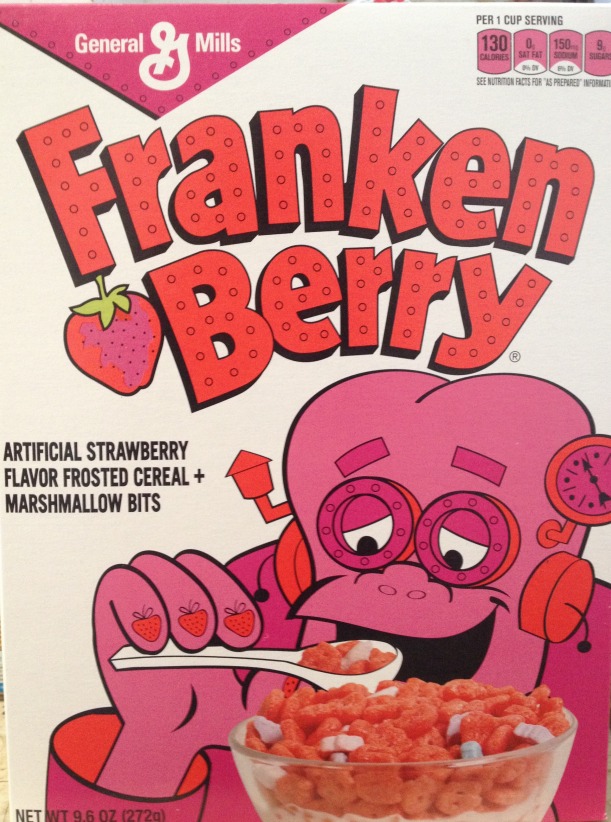
The first two cereals in the line were Count Chocula (the chocolate-flavored cereal was originally called “Dr. Count Chocula”) and the strawberry-flavored Franken Berry. With porthole-rimmed eyes, antenna ears and a pressure gauge sticking out of a big marshmallow head, the most shocking thing about Franken Berry was its hot pink complexion. General Mills created their monster cereals to piggyback on the success of Lucky Charms. These new character cereals contained marshmallow-studded grain puffs pitched by slightly spooky mascots involved in a wacky rivalry.
“Don’t be scared,” Count Chocula would say in his best Bela Lugosi accent while popping out of his cardboard box coffin. “I’m the super-sweet monster with the super-sweet new cereal!” Enter Franken Berry: “Piffle!” he yells, in a thinly masked accent of Boris Karloff. “Here’s the super-sweet new cereal.” It made for a tough choice to be sure and those catchy Saturday morning TV commercials sealed the deal. Monster Cereal commercials, alongside Burger Chef and Jeff and fellow cereal mascots Quisp and Quake, became much anticipated and nearly as popular as the cartoons themselves. Scores of sugar-fueled kids fondly remember those animated TV commercials nearly 50 years after they first aired.
But what about that February 1972 recipe change? Evidently someone in the General Mills merchandising department thought that the cereal didn’t match it’s mascot: it wasn’t pink enough. So Amaranth, a crimson food dye named after a South American grain (comparable to rice or corn) whose origins go back 8,000 years. It was a staple food of the Aztecs used as an integral part of religious ceremonies until being banned by the conquistadors upon their conquest of the Aztec nation. After that, Amaranth grew wild and soon became viewed as little more than a weed.
That is until 1878 when Amaranth was first synthesized by liquefaction and found to be a powerful bright red coloring agent that held it’s hue and was fade resistant. In 1906, Congress passed the Pure Food and Drug Act, the first legislation for food colors. They deemed seven colors suitable for use in food: orange, erythrosine, ponceu 3R, amaranth, indigotin, naphthol yellow, and light green. Amaranth became the 20th century’s most widely used food coloring. A cheap, tasteless substance, only a very small amount of the dye was necessary to lend flaming color to foods and makeup. By the 1970s, Amaranth dye could be found in $10 billion worth of comestibles and cosmetics including soft drinks, candy, make-up, hot dogs, ice cream, and processed fruits.
If you are a late-stage Baby Boomer or a Millennial who can remember eating Franken Berry as a kid, you may be wondering why all the fuss about Amaranth? Well, most Americans know Amaranth by another name: Red Dye Number 2. In 1938, Congress passed the Federal Food, Drug, and Cosmetic Act which gave these colors numbers instead of chemical names and Red Dye No. 2 was born. During the monster cereal “Red Scare”, medical personnel came up with a term for this marshmallow malady: they began calling it “Franken Berry Stool.” Turns out, Red Dye No. 2 is an indigestible pigment that can’t be broken down or absorbed by the body. So, just like a penny or a cherry pit, it comes out looking the same way it went in.
A 1971 report surfaced claiming that Russian scientists discovered that Red Dye No. 2 caused cancer in female lab rats. Panic ensued and, despite assurances from the medical community that the pink poo was totally harmless, the US Government reluctantly stepped into the fray. As reports of Frankenberry Stool Syndrome continued, the media went on a frenzy, denouncing the dye as a carcinogenic, tumor-inducing agent. Americans, already on edge from a Swine Flu scare a few months earlier, were on red alert. February 1972 was the height of the Cold War. Nixon’s trip to Communist Red China notwithstanding, the US was hyper-sensitive to anything coming out of the Soviet Union and when the source of the study was considered, the red potty hysteria slowly tapered off.
An article in the February 1972 edition of “Pediatrics” magazine (The Official Journal of the American Academy of Pediatrics), cited the case of a 12-year-old boy from Maryland whose “chief complaint was passing red stools for 2 days that were somewhat loose and unassociated with abdominal pain or other symptoms.” According to the case report, this particular kid had an adventurous history of eating things he shouldn’t, citing that on two separate occasions, he ate (and then threw up) coffee grounds. So when the child started pooping pink, his mom became convinced he had eaten something that was causing internal bleeding. She took him to the hospital where he stayed for the next four days.
His 1972 case study, titled “Benign Red Pigmentation of Stool Resulting from Food Coloring in a New Breakfast Cereal (The Franken Berry Stool)”, stated that the “stool had no abnormal odor but looked like strawberry ice cream.” When questioned, the mother revealed that the child had eaten bowls of Franken Berry cereal in the days before his hospitalization. After two days in the hospital, his red storm symptoms had subsided and, based on his mother’s information, the doctors did a little experiment. After letting the boy’s digestive system clear itself, they fed him four bowls of Franken Berry cereal over the next two days, he passed bright pink stools. But other than the startling pink hue, there were no other symptoms. Doctors sent the boy home, where the mother found his sister, the lucky beneficiary of that leftover box of Franken Berry cereal, also pooping pink.
The report further stated: “It has long been known that certain drugs and foods can cause alteration in the color of stools. These alterations in color may be of concern to parents and physicians unless recognized. The following case is presented as yet another example of a product which may alter stool color. The breakfast cereal under discussion has only been on the market a few weeks and physicians should be aware of its potential for producing reddish stools.” The report concluded, “Physical examination upon admission revealed in no acute distress and with normal vital signs…Physical examination was otherwise unremarkable.”
The Red Dye No. 2 fervor had a ripple effect. Mars candy removed their red M&M’s from their product bags for nearly a decade after the Franken Berry stool scare, even though Mars didn’t even use Red No. 2; according to mms.com. “However, to avoid consumer confusion, the red candies were pulled from the color mix.” Suddenly, hundreds of brands began recalling their Red No.2-infused products: hot dogs were pulled from grocery aisles, dog food was discarded in droves, ice cream treats were left to melt in landfills — and the red M&M disappeared. As for their part, General Mills switched to the less crimson colored Red Dye No. 40 (aka Allura Red) for use in their monster cereals.
Despite the temporary (and perhaps media driven) hysteria brought on by Franken Berry Stool Syndrome, in December of 1972, General Mills introduced Boo-Berry, the world’s first blueberry flavored cereal. Boo-Berry, used Blue No. 1 (a dye currently banned elsewhere in the world) which turned children’s potty piles green. Apparently, green stool seemed less life-threatening than the reddish hue caused by Franken Berry. Fruit Brute debuted a year later. Fruit Brute was discontinued by 1983 and replaced in 1988 by Fruity Yummy Mummy, which also had a short life as it was also dropped in 1993.
The Franken Berry Stool Scare can be found referenced in Stephen King’s 1981 novel “Cujo” as “Red Razberry Zingers”, but for most, it exists only as a vague memory. Another cereal stool scare occurred when Post’s Smurfberry Crunch Cereal was released in 1982 and was found to turn kid’s poop blue-thereby creating the ultimate Smurfs experience. However, Post changed the formula and re-released the cereal in 1987 as Magic Berries Cereal. Almost fifty years later, the exuberantly silly monster cereal mascots have survived and are on their way to pop culture immortality. Franken Berry, Boo Berry and Count Chocula can be found on bobblehead dolls, toy cars, t-shirts, pillows and even adult-sized Halloween costumes. The cereal itself can still be found as well, but they are most prominent during the Halloween season.
Oh, evidently if you find yourself traveling to the East Coast this Spring, you may well encounter a Frankenberry of a different color. According to the website mynamestats.com, there are an estimated 446 people in the United States named Frankenberry. The state with the most Frankenberry’s is Maryland where 103 people have this name, followed by West Virginia which claims 1.97 persons in every 100,000 residents with the name. In this case, according to the website, the Frankenberry population in the United States is 100.0% white. Well, so much for the Red Scare.
ABA-American Basketball Association, Indianapolis

Breakfast with Neto: The ABA Pension Issue.

Neto Breakfast cropedOriginal publish date:  February 27, 2018
This past year, my iPhone has been busy catching texts from Bob Netolicky. April 20, 2017: We lost Skeeter today. May 8, 2017: We lost Hawkeye today…October 2, 2017: We lost the Hawk today…November 26, 2017: We lost Snapper today… December 7, 2017: We lost Fatty today. No, we haven’t been playing Words With Friends. These are the nicknames of the former ABA players that have died in 2017: Skeeter Swift, George Irvine, Connie Hawkins, Steve Jones, and Roland Taylor. Neto has watched as fellow all-stars, teammates and roomies have slowly passed away. His eye is tuned to the news for a specific reason: Bob Netolicky is on a mission.
The former Drake University All-American, 4-time ABA all-star and 2-time Pacer champion has been working on a pension deal with the NBA. The sad fact is, since Neto started this quest, by his count, 50 former ABA pension eligible league-mates have passed away. No passing has affected Neto more than that of his old roommate, Harley “Skeeter” Swift.
Neto and Skeeter shared a couple ABA milestones during their careers. Both were members of the last Dallas Chaparrals team for the Chap’s final game on March 26. 1973. and both men were starters on the very first San Antonio Spurs team for their inaugural game on October 6, 1973 (a 91-89 exhibition game victory over the their NBA in-state rival Houston Rockets). Most people forget that Neto spent the 1972-73 season in the lone star state before coming back to the Pacers to finish out his career.
“Skeeter” played five seasons in the ABA. Along with the Chaps & Spurs, he played for the New Orleans Buccaneers, Memphis Pros and Pittsburgh Condors, averaging 11.6 points per game during his professional career. Years ago Swift had turned to Netolicky to help chase down his ABA pension. It wasn’t much, but Skeeter was in a desperate situation. He was battling lymphoma and recovering from a stroke. Skeeter had three hip-replacement surgeries and was in need of another. Alzheimer’s had taken hold and the 6’3″ former East Tennessee State Buccaneer standout was a shadow of his former self.
Netolicky put Swift in touch with the San Antonio-based pension administrator, who sent Swift a check for back payments. It came just in the nick of time. On April 14th of 2017, Neto received a voicemail from Skeeter. Swift was in the hospital, literally on the gurney prepping for surgery to repair that busted hip. “Hey Roomie, just wanted to call you before I head in (to the operating room)” Swift says between long pregnant pauses to choke back tears. “I can never repay you for all that you’ve done for me. And uh … I’ll just wait to hear from you. Bye-bye.”
Neto thought he’d have plenty of time to return the call after giving his roomie a few days to recover. He never got the chance. 70-year-old Skeeter Swift died on April 20, six days after leaving that message. Netolicky has played this message for his old Pacers coach, Hall of Famer Slick Leonard (who still calls Neto “Bobby”). He has played it for teammates including Darnell Hillman and George McGinnis. Sometimes, he just plays it for himself as a reminder of what it is that he is fighting for. I have heard it a few times myself, and trust me, it is a tear-jerker.
Most of the ABA alumni are in their seventies now. Some are unhealthy, others are broke. Many are bewildered by the lack of concern by an NBA whose game today more closely resembles that of Dr. J and Connie Hawkins than it does Dave Cowens and Walt Frazier. Today, the average NBA salary is approaching $5 million. ABA players want the NBA, which absorbed their league in 1976, to at least treat them as well as the NBA pre-1965ers. ABA alums can’t help but chuckle at the league’s 2018 slogan: the NBA cares. They watch as the NBA sponsors days of service, visit children’s hospitals and build schools in Mexico City, while legacy ABA players struggle to cover medical bills, keep the lights on or, in some cases, survive while living out of their cars.
Netolicky has managed to shake loose some of that often promised, but seldom delivered, pension money to alleviate the most dire circumstances of his former teammates and rivals. Neto states, “People are dying out here. We found one player living under a bridge, another out of his car. All we’re saying is that legally, maybe the NBA doesn’t have to do this, but it is the right thing to do.”
On April 5th, a couple weeks before Skeeter Swift died, ABA legacy players delivered signed petitions to the NBA and National Basketball Players Association in search of better pensions. The petition quotes from the 1976 ABA-NBA merger agreement that stipulates “pension rights and privileges for ABA players equivalent to that provided NBA players.” As of yet, the NBPA hasn’t responded to the ABA petition and has refused to comment publicly “out of respect for the ABA players.” However, don’t dismiss this petition movement as just another money grab by already overpaid professional athletes. The ABA retirees are just asking for what the NBA promised them.
“We started this thing 9 years ago when most of the guys were turning 63 and reaching retirement age.” says Neto. “Back then we had around 195 eligible guys who played 3 years or more in the league. Now we’re down to 147.” And the number changes almost every week. When asked how easy it has been for the ABAer’s to collect their promised pension from that 1976 merger, Neto replies, “Well, it was supposed to be managed by a group in San Antonio, but the paperwork was never properly administered and a lot of guys fell through the cracks.”
I’m not making excuses for the inflated salaries of athletes, believe me. But today’s athletic salaries are a tiny fraction of those from the 1960-70s era. Keep in mind that an average career length of a pro athlete is 3.3 years for the NFL, 4.8 for the NBA and 5.6 for Major League baseball. Netolicky, along with Byron Beck, Louie Dampier, Gerald Govan, Stew Johnson, and Freddie Lewis, are the only players to play all nine seasons of the ABA, twice the career span of today’s ballers. They, along with the other surviving ABA alums, have been waiting for their promised pensions since the Bicentennial year. Think about that for a minute.
Neto continues, “The NBA player pension has been increased 30 times since 1976 while the ABA pension has remained the same ($60 per month for every year of service minimum 3 years) with no collective bargaining rights and certainly no cost of living increase. All we wre asking is that ABA players receive the same pension ats the pre-1965 NBA guys are getting.” NBA pensions weren’t created until 1965, meaning players before 1965 were shut out. That changed in 2007 when the NBA gave pre-1965 NBA players a pension of $300 per month for every year of service (again, minimum experience: 3 years). In other words, a six-year NBA veteran from the 1950s receives a pension of $1,800 a month while an ABA 6-year vet receives $ 360 a month.
While it is true that many of the ABA vets, Bob Netolicky among them, never played a game in the NBA, the only 2 teams Neto played on were absorbed by the NBA. Not only did the NBA absorb four ABA franchises (the Pacers, Spurs, Nuggets and Nets), they also adopted some of the ABA’s most iconic features: The 3-point shot. The slam-dunk competition. The All-Star Weekend party. The petition also points out that NBA teams sell ABA apparel on line and in their gift shops. The Pacers recently offered replica throwback jerseys for ABA icons Mel Daniels, George McGinnis, Billy Keller, Freddie Lewis and, of course, Netolicky. “I haven’t seen a penny of that,” Netolicky says.
Neto wants to make it clear that his beef is with the NBA, not the Indiana Pacers. “The Pacers have been good to me over the years. I’m proud of the teams we played on and we are still a family a half century later. Playing for the Pacers and being part of the Pacers family has been one of the highlights of my life. I’d like to think that we did our part in contributing to the rich sports tradition Indianapolis enjoys today.” However, in this writer’s opinion, what’s right is right and just like Hoosier sports fans care about their city, they should also care about the players that helped build its sports legacy.
To be fair, it must be noted that the NBA and the player’s association have agreed to allow ABA players access to the NBA Players Legacy Fund. ABA players in need can apply for grants totaling a lifetime maximum of $10,000. But those grants are a one-time benefit reserved for the most hardship cases. Not to mention, this benefit is not widely known among former ABA players. And natural attrition continues to shrink those eligibility numbers every month.
Like many Hoosier kids born in the sixties, I grew up as a fan of the ABA. My allegiance will always be with those great Pacers teams. I can recall with perfect acuity the rotation of that red,white and blue ball, the coolness of those blue suede Adidas sneakers and the loudness of Slick Leonard’s suits. And I can also visualize those star spangled Nets uni’s, the blue-grass jerseys of the rival Colonels and the sparkly silver glitter flecked jerseys of the Spirits of St. Louis. Not to mention the fros, furs and goatees that defined the hoop stars of the ABA. All of these memories make me smile. Bob Netolicky hopes that these same memories will also move the NBA to do what is right and proper by the former ABA players who helped set the style for today’s league.
Fans of the ABA will soon have opportunities to show up and support the league alumni. Bob Netolicky, Robin Miller and former Pacers and league President Dick Tinkham have written a book appropriately called, “We changed the Game.” The official release party and book signing will be held right here in Irvington at the Irving Theatre on Sunday March 18th from 2:00 to 4:00. The trio, along with other former ABA Pacer greats, will be on hand to share stories, answer questions and sign copies of their book for fans. The event is free to the public.
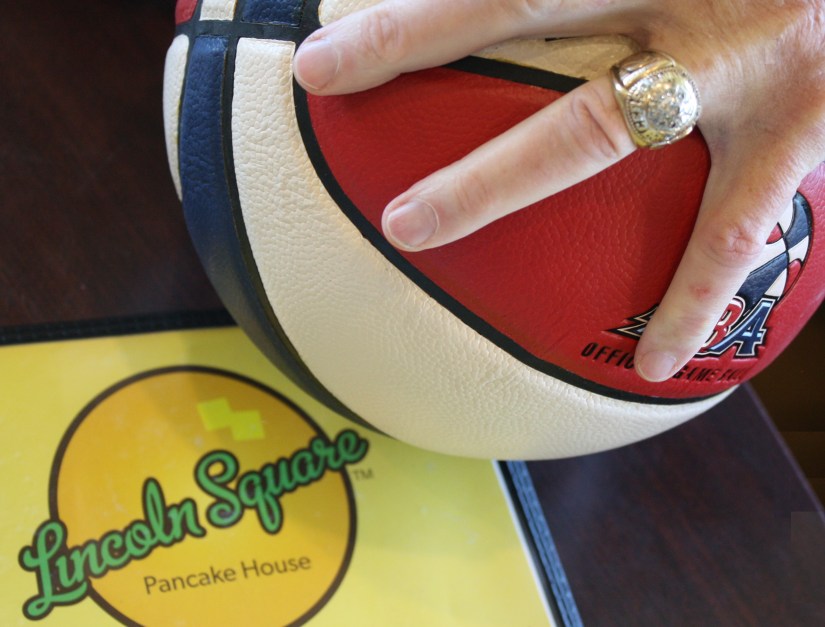
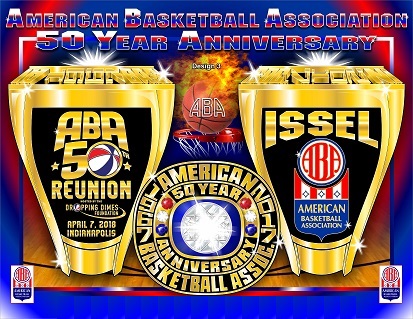
Indianapolis will also play host to the 50th Anniversary of the ABA on Saturday April 7th. ABA Stars and Hall of Famers alike will converge on the Circle City for this once-in-a-lifetime event. The public is invited to come out to historic Hinkle Fieldhouse that Saturday from 11:00 to 3:00 for a memorabilia show and autograph signing. Part of the festivities include a special ring presentation for ABA alumni. Sponsored by the Dropping Dimes foundation, each player will receive an exclusive 50th ABA anniversary alumni ring as a token of appreciation for the players who changed the face of pro basketball. Mark your calendars, stayed tuned for future articles and make plans to attend these landmark events.

ABA-American Basketball Association, Indianapolis

The ABA Comes to Indy this weekend.

ABA Reunion article photo  Original publish date:      April 2, 2018

You have an excellent opportunity to be a part of basketball history this weekend, in fact, it is a once in a lifetime opportunity. This Saturday, April 7th (2018) Hinkle Fieldhouse on the campus of Butler University will be the site of the 50th reunion of the American Basketball Association. The ABA holds a special place in the hearts of most Hoosiers. Our hometown team, the Indiana Pacers, was the flagship franchise of this once legendary league. If you are a fan of the NBA too young to remember those heady days of the ABA in the Circle City, then you need to get to Hinkle from 11 AM to 3 PM on Saturday and see these legends in the flesh for yourselves.
The reunion is being hosted by and benefits the Dropping Dimes Foundation (https://droppingdimes.org/) an Indiana not-for-profit 501(c)(3) organization. Dropping Dimes’ main focus and concern is for the well-being and betterment of former players of the American Basketball Association and their families, who are experiencing financial or medical difficulties and have encountered significant financial hardship or sickness. Every penny raised from this event will go towards this worthy mission.
Hall of Famers Julius Erving, Rick Barry, Spencer Haywood, George Gervin, Dan Issel, George McGinnis, Doug Moe, Larry Brown, Louie Dampier, Artis Gilmore and Bobby “Slick” Leonard are expected to attend. Other confirmed guests include many ABA All-stars and fan favorites from the 9-year history of this fabled league. In all, an estimated 100 alumni players are expected to attend including Hoosier household hoops names like Freddie Lewis, Darnell Hellman, Billy Keller, Don Buse, Jerry Harkness, Billy Knight, Donnie Freeman, Len Elmore and Dave Robisch. Other hardcourt heroes like Mack Calvin, Willie Wise, Darel Carrier, Chuck Williams, Al Smith, Ralph Simpson and Jim Eakins will also visit the scene of past battles on the hardwood.
Starting at 11 AM, each ABA alumni player in attendance will be presented with a special 50th anniversary ring in appreciation of their years of service in the league. Dave “The King” Wilson will act as emcee for the ring presentation ceremony with Senator Joe Donnelly, Mayor Joe Hogsett, Congresswoman Susan Brooks, Rupert Boneham from Survivor and Councillors Mike McQuillen and Vop Osili are scheduled to act as presenters. Butler mascot Blue III will also be on hand to “present” a few of the rings.
As part of the event, there will be a sports memorabilia and card show going on for fans at the same time. The card show is being managed by J & J All-Star sports cards of Indianapolis (www.jjallstarsportscards.com). Local eastside artist Shane Young (aka Fitz) will be painting an original piece of artwork on site to commemorate the occassion. Several local Girl Scout troops will be on hand to assist the ABA veterans. There will be trivia, history, memories and plenty of picture taking opportunities in what is sure to be the last time this collective group of O-G ABA ballers assemble in one place.
Dropping Dimes will have commemorative 50th anniversary pennants and basketballs for sale at the event and there will be an opportunity for the public to get autographs from the players for a nominal fee. The autograph fee benefits dropping dimes and is tax deductible. Admission is $10 at the door. Children aged 14 and under are free.
You may wonder, what is my interest in the 50th anniversary of the ABA? Well, over 20 years ago I co-hosted the 30th anniversary gathering of the ABA at the Hoosier Dome in Indianapolis. Along with my friends Bob Netolicky and Dick Tinkham, we hosted around 75 former players over an August weekend in 1997. Nothing like that had ever been attempted before and we really never expected it to be attempted again. Neto and I were surprised some eight weeks ago when we were contacted by the guys at Dropping Dimes to organize this Saturday event at Hinkle.
I have been a fan of the ABA since I was a little kid and when the league folded I knew basketball would never be the same for me. It didn’t hurt that I was growing up in a city where the hometown team was always winning championships. Times were different then and so were the players. It was not uncommon to run into Pacers players in the grocery stores, restaurants and schools. They seemed more like neighbors than stars. The game in the ABA was different, with the red, white and blue ball and a three-point shot, it was way more exciting.
I’ve spoken many times in past columns about how my family would take me down to the state fairgrounds Coliseum and drop me off while they scooted over to the Tee-Pee restaurant for coffee and pie. I never had a ticket but somehow always managed to sneak inside. During those non-PC days the Coliseum allowed ticket holders to smoke cigarettes, cigars and pipes during games. There was always a thick cloud of smoke hanging about 12 to 14 feet above the court. I can still remember when Billy Keller would bring that ball up court as coach Slick Leonard yelled “Go for three Billy, shoot the three.” Keller’s high arcing shot would disappear into that cloud of smoke momentarily only to reappear a little farther down the cloud bank before swishing through the net. I know smoking is bad for you, but you know, that was a thing of beauty.
During that 1997 reunion, I was fortunate enough to witness epic scenes and visit with players that are no longer with us. I remember Marvin “Bad News” Barnes talking to Bob Costas about plane flights and time changes as if it were a time machine that Barnes wanted no part of. I remember Kokomo high school prep star Jim “Goose” Ligon walking around the room with a smile as big as the moon on his face. Goose was being led by the arm because he could barely see. But he insisted on being there for every moment because he knew he would soon be blind. Goose died less than seven years later in 2004.
I remember Gabe Rubin and Connie Hawkins spotting one another from across the room and coming together in a heartfelt embrace that ended with both men sobbing like children. Only the truest of fans with knowledge of the backstory understood the significance of this special moment. During Connie Hawkins’ freshman year at Iowa, he was a victim of the hysteria surrounding a point-shaving scandal that had started in New York City, Despite the fact that Connie was never involved in any conspiracy, he was kicked out of college and banned from the NBA.
By that 1967-68 first year launch of the ABA, Hawkins found himself playing for the Harlem Globetrotters. Rubin signed Hawkins to a two-year, $45,000 contract to play for his Pittsburgh Pipers team. That team went 54-24 and won the ABA championship. The Hawk led the league in scoring that year and won both the ABA’s regular-season and playoff MVP awards. He was inducted into the Hall of Fame in 1992.
That meeting between these two men over 20 years ago at that 1997 30 year ABA reunion was the first time the two men had seen each other since Connie had left to join the NBA’s Phoenix Suns in 1969. Gabe Rubin died on November 7, 2003. Connie Hawkins died on October 7, 2017. I’m proud to have played a small part in their personal reunion. Other memories from that reunion include 6’11” ABA Carolina Cougars / Kentucky Colonels and NBA player Jim McDaniels walking through the hall as curious onlookers pointed and whispered “Hey there’s Moses Malone” as he passed. McDaniels died on September 6, 2017.
Other notable attendee losses from that reunion include Marvin Barnes, Maurice Lucas, Zelmo Beaty and Mel Daniels, I remember Roger Brown and Walt Simon just barely missed attending that 1997 reunion, passing mere weeks before the event. I make these observations not to be morbid, but rather to illustrate the point that although mortals pass, memories last forever. Don’t miss your opportunity to revisit memories of your childhood, reconnect with heroes from the past and create some moments to remember of your very own. Come out and see us next Saturday. Tell ’em Al sent ya.
Date/Time: Saturday, April 7, 2018 9:00 am – 3:00 pm Location: Hinkle Fieldhouse 510 W. 49th St. Indianapolis, IN 46208
Schedule: 9:00: Doors Open & Trading Card Show Begins. 11:00: ABA Players Arrive 11:00-12:30: Ring Presentation Ceremony
12:30-2:30: Autograph Session. Continue reading “The ABA Comes to Indy this weekend.”

Baseball

Unlucky Don Gullett’s Lucky Decade

Original publish date:  April 16, 2018
Chances are, if I asked you to name the most successful pitcher of the 1970s, you’d choose a lot of names before you got to my pick. Baseball being the stat driven sport that it is, you could argue all summer long abGulletout the question itself, let alone the answer. And don’t even get me started on sabernetrics — those guys are nuts. But for my money, the best pitcher of the 1970s was Don Gullett.
If you were a late stage baby boomer growing up in central Indiana, you were a fan of the 1970s Cincinnati Reds. Those Big Red Machine teams were fun to watch. At least a few of those players started out with the Indianapolis Indians, the AAA farm club of the Reds. Any Reds fan worth his pine tar can name the Reds “Great 8” starting line-up: Bench, Rose, Morgan, Pérez, Concepción, Foster, Griffey, and Gerónimo.
That Great 8 included baseball’s all-time hit leader, three Hall of Famers, six NL MVPs, four NL home run season leaders; three NL Batting Champions; 25 Gold Glovers and 63 All-Star Game appearances. Those 1975 and 1976 World Series championship teams are considered the greatest teams of our generation. Ask any Reds fan who’s on the mound, the answer is always Don Gullett.
Donald Edward Gullett was born the sixth of eight children from tiny Lynn, Kentucky, (in the northeastern part of the state across the Ohio River from Portsmouth, Ohio) on January 6, 1951. As a teenager Gullett worked on neighboring farms pitching bales of hay to supplement the family income. It should come as no surprise that Gullett was so good, so young that he began taking the high school mound while just an eighth grader. The pro scouts began visiting Greenup County to watch the phenom before he was old enough to drive.
A three-sport star in high school, Gullett attended McKell High School. As a senior he was All-State in baseball, basketball, and football. Although forever associated with baseball, his exploits on the gridiron made him a Kentucky schoolboy legend. In one game alone against Wurtland High School Gullett scored 72 points, scoring 11 touchdowns and 6 extra points. Later he scored 47 points in a basketball game against Wurtland. Needless to say, he was heavily recruited by major colleges for all 3 sports. But Gullett’s first love was baseball. He won 30 games for McKell High School as a senior including a perfect game where he struck out 20 of the 21 batters he faced.
The Reds selected 18-year-old Don Gullett in the first round of the 1969 Major League draft, number 14 overall. He signed for a $25,000 bonus. He bought his first car with that bonus, an orange Plymouth Roadrunner. He pitched for the Northern League’s Sioux Falls Packers, going 7-2 with a 1.96 ERA in 11 starts that season. He made his big league debut on April 10, 1970 against Mays, Bonds and McCovey’s San Francisco Giants. The left-hander relieved Ray Washburn in the fifth inning with the bases loaded and two outs. Don retired Tito Fuentes on a fly ball to the shortstop. Gullett struck out Willie Mays to end the next inning before being replaced. At 6 feet and 190 pounds, those Bay City bombers didn’t bother Gullet a bit.
The rookie spent most of 1970 in the bullpen, relieving 42 times and starting twice. On August 23 against the New York Mets, he struck out six batters in a row, tying the NL record for consecutive strikeouts by a relief pitcher. Gullett struck out eight of the twelve batters he faced in that game. Gullett’s success was due to his blazing fastball, deceptive change-up, and excellent control. By now, sportswriters were comparing the young lefty to Sandy Koufax.
Cincinnati won the NL West in 1970, then swept Pittsburgh in the NLCS, Gullett picked up two saves along the way by retiring Wiilie Stargell and Roberto Clemente respectively. In the World Series the Reds lost to the Baltimore Orioles in five games but Gullett pitched well, appearing in three games and giving up only one run in 6⅔ innings. After Pirate slugger Willie Stargell faced Gullett for the first time and struck out on three pitches, he described Gullett as “Wall-to-wall heat.” Gullett earned the nickname “Smokin’ Don” for his white-hot fastball and his bad habit: cigarettes.
In 1971 Gullett became a full-time starter, winning 16 games while losing six, leading the league in winning percentage with .727 and posting a 2.64 earned-run average. Despite his stellar pitching, the Reds had a losing record (79-83) and didn’t make the 1971 postseason.
Bad luck struck Gullett in 1972 when he was diagnosed with hepatitis. When he returned, Manager Sparky Anderson assigned him to the bullpen. That year Gullett had his only losing season (9-10) of his entire career but the Reds still won the NL West. The Reds beat the Pirates and again headed to the World Series against the Oakland A’s but lost the Series in seven games.
Gullett, not yet fully recovered from hepatitis, spent the first month of the 1973 season in the bullpen. He again took the bump as a starter and finished the season with nine consecutive victories and posted a career high 18 wins against eight losses. On August 18, Gullett surrendered the 660th and final career home run hit by Willie Mays. The Reds won the NL West again in 1973, but lost the NLCS to Mays and the New York Mets three games to two.
By 1974 Don had added a forkball (later called a split-fingered fastball) to his pitching repertoire. That season, manager Sparky Anderson said, “It’s the only Hall of Fame battery active in baseball today.” The manager was speaking of Johnny Bench and Don Gullett.
“Barring an injury, (Gullett) is almost sure of making the Hall of Fame. I know he’s going to win at least 250 games with the start he has.” Sparky had good reason to expect great things for his young left-hander. After all, the three best southpaws of the previous generation — Warren Spahn, Whitey Ford, and Sandy Koufax — were in the Hall of Fame. In 1976, when Gullett turned 25, he had already won 91 games — many more than Spahn (8), Ford (43), and Koufax (53) had won by that age.
During that fateful 1975 Big Red Machine Championship season. Don was already 8-3 by June 11 with a 2.09 earned-run average. He seemed on track to a 20-win season. But on June 16 in the ninth inning of a game against Atlanta, Larvell Blanks hit a line shot back up the box that fractured the pitcher’s left thumb. Gullett earned his ninth victory, but was out for two months. He returned on August 18 under the watchful eye of manager Sparky Anderson. Gullett`s arm snapped like a whip, and the ball popped Bench’s catcher’s mitt at 96 m.p.h. Don Gullett was back. He won five more games (losing only one) to finish the year at 15-4.
The Reds captured the West and once again met the Pirates again in the NLCS. Gullett started the first game for the Reds, winning 8-3 but the big story was his hitting. He had a single, a home run and three RBI’s. The homer was the first, and only, of his major-league career and the first ever by a pitcher in an NLCS game. The Reds ousted the Pirates 3- straight and beat the Boston Red Sox in the 1975 World Series. Everybody knows that story and many call it the greatest World Series ever played.
After the Series was over, Gullett returned to his 75-acre Greenup County farm on Ky. Hwy. 7 to raise Black Angus cattle, it was one of the same farms where Don had baled hay as a teenager. The deeply religious Gullett eschewed drinking, carousing, and womanizing. He preferred hunting, fishing, and listening to country music. The only change in Gullett after he became a World Series champ was that the Roadrunner became a Lincoln Continental.
Sparky’s Reds expected great things from Gullett in 1976. The manager said “Barring another injury, I figure Don’s a cinch to win 20 or more this season.” However, once again, the injury bug caught up with Don Gullett. On May 20 muscle spasms in the neck plagued him until the end of August. Despite the pain, Gullett went 11-3, for a winning percentage of .786 and a 3.00 ERA. The Reds won their division again and swept Philadelphia in the NLCS, three games to none.
The New York Yankees won the AL pennant, and faced the Reds in the World Series. Despite tearing tendons in his ankle during his game 1 victory, the Reds swept the Yankees in four games, becoming the first NL team to win back-to-back world championships since the New York Giants of 1921 and 1922.
In 1976 free agency hit baseball and Don Gullett was right in the middle of it. For the first time ever, veteran players with expiring contracts could play out their options and sign with any team they wanted. The Reds were unwilling to offer Gullet a long term contract. As a result, a dozen clubs bid for his services with the New York Yankees signing Gullet to a six-year $2 million contract. Despite Gullett’s injuries, he still had the best winning percentage in baseball and the Yanks were willing to gamble on his health.
On April 10, 1977, “The Two Million Dollar Man” made his debut as a Yankee. Even though injuries plagued Gullett for most of the season resulting in missed starts, he managed to win 14 games while losing only four to lead the American League with a .778 winning percentage. The Yankees won the AL East and beat Kansas City in the ALCS three games to two. Gullett earned another trip to the World Series where the Yanks beat the NL champ Dodgers 4 games to 2.
An aching left shoulder limited Gullett to only eight appearances in 1978. He won four of his first six starts, and pitched two complete games. On July 9 he faced the Milwaukee Brewers and could not get out of the first inning. He allowed four runs on three hits and four walks and was charged with the loss. It was the last time he ever pitched in the majors, his playing career over at the age of 27. On September 29 he underwent surgery for a double tear of his rotator cuff. Although unable to play in the 1978 World Series, he was on the Yankees’ roster. Gullett is one of the few men in the history of baseball to be on the roster of four consecutive World Series champions — Cincinnati in 1975 and 1976 and the Yankees in 1977 and 1978.
The Yankees released him on October 30, 1980. He finished his career with 109 wins/50 losses, for a winning percentage of .686, second only to Whitey Ford (.690) among all left-handed pitchers (minimum of 100 wins).
After his release Gullett returned to farming. He had a heart attack at age 35 that nearly killed him. Gullett stopped smoking and continued working on his farm, but he was still drinking lots of coffee. In 1989 he suffered another heart attack. In June 1990 he underwent triple-bypass heart surgery. He served as pitching coach for the Cincinnati Reds from 1993 to 2005, a career longer than he had as a player.
Don Gullett played for the Reds from 1970-76 and the New York Yankees from 1977-78. His nine-year career spanned the 1970s, during which Gullett was a member of six World Series teams (1970, 72, 75, 76, 77, 78), including four consecutive World Champions. In nine Big League seasons, Gullett played in the post season seven times. His career ended 40 years ago. While he may not be the pitcher most fans remember as the best of the best, at least for the seventies, he was the most successful pitcher in the Big Leagues.
The courthouse in Gullett’s hometown has two stone markers out front, one that reads: “This is Gullett Country” and another honoring Greenup County’s poet laureate Jesse Hilton Stuart. You’ve likely never heard of Stuart, heck you may not even remember Don Gullett. But perhaps it was Stuart who summed up the career of Smokin’ Don Gullett best when he wrote: “Time will go on as time will. New people will be born into the world. The old people go from the world and give place to the new. Children grow up, and babies are born. And the world goes on. There is not any turning back the hand on the clock.”